41
41
patients treated in
phase 3 clinical trials
patients treated in
phase 3 clinical trials
2
2
clinical
trials
clinical
trials

41
41
patients treated in
phase 3 clinical trials
patients treated in
phase 3 clinical trials
2
2
clinical
trials
clinical
trials
Transfusion Independence
The weighted average hemoglobin greater than or equal to 9 g/dL without any blood transfusions for a continuous period greater than or equal to 12 months
Hemoglobin
Specifically measured total hemoglobin and ZYNTEGLO-derived adult hemoglobin

Iron
Iron reduction (lowering of the amount of iron in the body)

Safety
Evaluate adverse effects that occur
Those eligible for clinical trials were patients with beta-thalassemia (also known as beta-thalassemia major or Cooley's Anemia) requiring regular transfusions categorized as either:
In the 2 years before entering the trial:
PHASE 3: ONGOING (AS OF MARCH 2021)
PHASE 3: ONGOING
(AS OF MARCH 2021)
| PRIMARY OUTCOME | Transfusion Independence | |
| STUDY 1 |
STUDY 2
|
|
| NUMBER OF PARTICIPANTS |
23 PATIENTS |
18
PATIENTS |
| 4-34 | 4-33 | |
| AGE (YEARS) | 14 PEDIATRICS 9 ADULTS |
13 PEDIATRICS
5 ADULTS |
| GENOTYPES | non-β0/β0 23 |
non-β0/β0*
6 β0/β0 12 |
| MEDIAN FOLLOW-UP STUDY |
29.5
MONTHS (min, max: 13.0, 48.2) |
24.6
MONTHS (min, max: 4.1, 35.5) |
| ENROLLED IN FOLLOW-UP STUDY |
19/23 PATIENTS† |
10/18
PATIENTS† |
| *Non-β0/β0 patients in Study 2 included severe genotypes similar to β0/β0. †Remaining patients are still in the process of completing their initial clinical trial before they have the option to continue in the follow-up study.
Pediatric is defined as people under the age of 18.
|
||
| PRIMARY OUTCOME | |
| Transfusion Independence | |
| STUDY 1 |
STUDY 2
|
| NUMBER OF PARTICIPANTS | |
| 23 PATIENTS |
18
PATIENTS |
| AGE (YEARS) | |
| 4-34 |
4-33
|
| 14 PEDIATRICS 9 ADULTS |
13 PEDIATRICS
5 ADULTS |
| GENOTYPES | |
| non-β0/β0 23 |
non-β0/β0*
6 β0/β0 12 |
| MEDIAN FOLLOW-UP STUDY | |
| 29.5 MONTHS (min, max: 13.0, 48.2) |
24.6
MONTHS (min, max: 4.1, 35.5) |
| ENROLLED IN FOLLOW-UP STUDY | |
| 19/23 PATIENTS† |
10/18
PATIENTS† |
| *Non-β0/β0 patients in Study 2 included severe genotypes similar to β0/β0. †Remaining patients are still in the process of completing their initial clinical trial before they have the option to continue in the follow-up study.
Pediatric is defined as people under the age of 18.
|
|
| 49% FEMALE |
51% MALE |
| 49% ASIAN |
44% CAUCASIAN |
|
||
| 49% ASIAN |
44% CAUCASIAN |
|
|
||
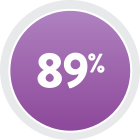
In two phase 3 studies, about 9 out of 10 (89%) people treated with ZYNTEGLO stopped
transfusions* and had a normal or near normal median total hemoglobin of 11.5 g/dL
| STUDY 1 |
STUDY 2
|
| 91%
|
86%
|
| STUDY 1 |
STUDY 2
|
| 11.8g/dL |
10.2g/dL
|

100% of patients (n=32/32) who have achieved transfusion
independence maintained it with a min, max duration of ongoing
transfusion independence of 12.5+ to 39.4+ months. Median
duration of transfusion independence was not reached.
In the phase 3 trials, 4 out of 36 patients who were evaluated for transfusion independence
didn't achieve it, but were still able to:
| STUDY 1 | |
| TRANSFUSION FREQUENCY REDUCTION |
TRANSFUSION
VOLUME REDUCTION |
| PATIENT 1 | |
| 30% |
32%
|
| PATIENT 2 | |
| 26% |
31%
|
| STUDY 2 | |
| TRANSFUSION FREQUENCY REDUCTION |
TRANSFUSION
VOLUME REDUCTION |
| PATIENT 3 | |
| 87% |
92%
|
| PATIENT 4 | |
| 21% |
3%
|
Reductions observed in phase 3 clinical trials from 6 months post-ZYNTEGLO infusion to the
patient's last follow-up visit when compared with their pre-enrollment transfusion requirements.
The majority of those who achieved transfusion independence
were not receiving chelation as of last follow-up.
| STUDY 1 | STUDY 2 | ||||||
| PATIENTS WHO ACHIEVED TRANSFUSION INDEPENDENCE |
20 patients with non-β0/β0 |
12 patients with β0/β0 or non-β0/β0
|
|
DID NOT RESTART CHELATION |
RESTARTED
THEN STOPPED CHELATION |
||
| WERE NOT RECEIVING CHELATION AT LAST FOLLOW-UP |
65% (13/20 patients) |
58%
(7/12 patients) |
Of those
who were not on chelation at last follow-up |
STUDY 1 |
69% (9/13 patients) |
31%
(4/13 patients) |
|
| Received phlebotomy to remove iron |
35% (7/20 patients) |
8%
(1/12 patients) |
|
STUDY 2 |
43% (3/7 patients) |
57%
(4/7 patients) |
|
|
§Iron removal therapy was managed at a doctor’s discretion. Restarting iron chelation after ZYNTEGLO may be necessary.
|
|||||||
| PATIENTS WHO ACHIEVED TRANSFUSION INDEPENDENCE |
|
| STUDY 1 20 patients with non-β0/β0 |
STUDY 2
12 patients with β0/β0 and non-β0/β0 |
| WERE NOT RECEIVING CHELATION AT LAST FOLLOW-UP |
|
| 65% (13/20 patients) |
58%
(7/12 patients) |
|
|
|
| Of those who were not on chelation at last follow-up |
|
| DID NOT RESTART CHELATION | |
| 69% (9/13 patients) |
43%
(3/7 patients) |
RESTARTED THEN STOPPED CHELATION |
|
| 31% (4/13 patients) |
57%
(4/7 patients) |
|
|
|
| Received phlebotomy to remove iron | |
| 35% (7/20 patients) |
8%
(1/12 patients) |
|
§Iron removal therapy was managed at a doctor’s discretion. Restarting iron chelation after ZYNTEGLO may be necessary.
|
|
Stay Connected
Stay Connected
Sign up to receive emails for additional ZYNTEGLO information and resources